
Umm Taha
The Hidden Impact of Violent Media on Our Children
As parents, we often try to protect our children from physical harm — we feed them well, make sure they are safe, and give them love. But just as important is protecting their minds and hearts from harmful influences that may seem “harmless” on the surface — such as violent video games, movies, or even cartoons.
At first glance, many people believe that exposure to violence in media does not play a major role in shaping a child’s behavior. However, decades of research — and daily experience — tell a different story.
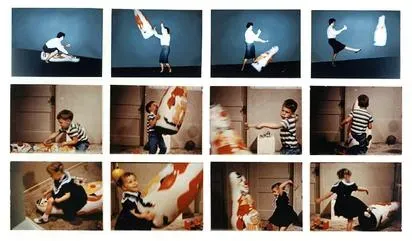
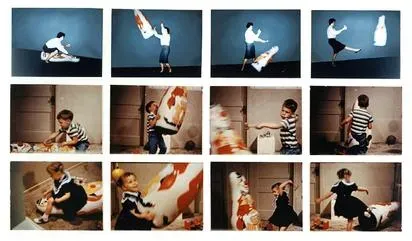
One of the most famous studies on this topic was conducted by psychologist Albert Bandura in the early 1960s, often referred to as the Bobo Doll Experiment. In this experiment, groups of children were shown different scenarios involving an inflatable toy called the Bobo doll.
Some children watched an adult (the “model”) behaving aggressively toward the doll — hitting, kicking, and shouting at it. Others watched a model calmly playing with different toys while ignoring the doll, and a third group saw nothing at all.
When the children were later invited to play in a room containing the same toys, including the Bobo doll, their behavior was strikingly different. Those who had seen the aggressive model began to imitate what they had witnessed — they hit, kicked, and even shouted the same words they had heard. The children who watched the calm model showed no interest in the doll, and those who saw nothing at all simply played naturally without aggression.
Bandura concluded that children learn behaviors by observing and imitating others, especially during their early years, before moral understanding and self-control are fully developed.
Children under the age of seven are like sponges. They absorb everything they see and hear — words, tone of voice, gestures, emotional reactions — and store these impressions deep in their memory. Later, when they face a similar situation, they unconsciously retrieve and repeat those learned behaviors.
This is why exposure to aggression — whether at home, school, or on a screen — can have a lasting effect. A child who sees violence regularly may come to view it as a normal or acceptable way to express anger or solve problems.
Aggressive behavior in a child can stem from many sources:
Witnessing conflict or aggression between parents or relatives
Experiencing verbal or emotional abuse
Being surrounded by peers or caregivers who use harsh language
Watching violent movies, cartoons, or playing aggressive games
Even something as simple as walking through a park and hearing other children use inappropriate language can leave an imprint. A young child doesn’t yet have the ability to filter or reject harmful behaviors — they simply observe and absorb.
The early years are when a child’s sense of morality, empathy, and social understanding are formed. As parents, we carry a responsibility to guide and guard these formative experiences.
This means:
Monitoring what your child watches and plays
Paying attention to the friends and classmates your child spends time with
Being mindful of how you speak at home and what conversations take place around your children
By the time a child reaches adolescence or adulthood, their internal moral compass is largely shaped. A 16- or 20-year-old who was raised in a stable, value-based environment will be far less influenced by violent or aggressive content, because their sense of right and wrong has already taken root.
But for younger children, what they are exposed to today sets the foundation for how they will think, react, and behave for the rest of their lives.
The theory that began with Bandura’s experiment in the 1960s continues to hold deep relevance. Whether through screens, words, or the behavior of those around them, children learn by imitation. Our role as parents is not only to teach them — but also to protect their innocence and guide their eyes, ears, and hearts toward goodness.
With love, Umm Taha.